
Community Fibre is a full fibre provider in London, offering lower prices and symmetrical upload and download speeds up to 5Gbps.
BT uses the Openreach network, with full fibre available in many London areas alongside a wider range of plans, add-ons and home phone options.
For London households who can get both, it's a straight trade-off: lower bills with Community Fibre, or more flexibility with BT.
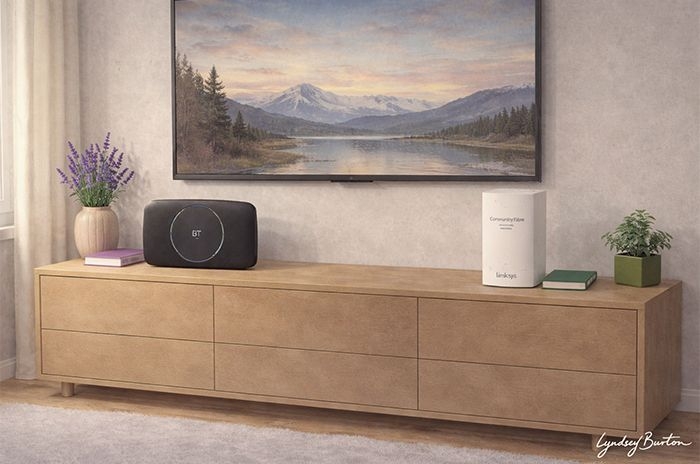
Quick verdict
Community Fibre undercuts BT at every equivalent speed tier - often by a significant margin - with symmetrical uploads, a more modern router as standard, and no setup fee. For London households who just want fast, reliable broadband at the lowest price, the case is straightforward.
BT's strengths sit around the connection rather than in it. Router-level parental controls, free antivirus, 4G backup via BT Halo, and a full EE TV service with Netflix, Sky Atlantic and TNT Sports are all things Community Fibre simply doesn't offer. For families or households that want a more complete home setup, that broader feature set justifies the higher cost.
Decision: for most Londoners, Community Fibre is the better starting point. BT earns its place where the extras matter - particularly TV, resilience, or families who need managed parental controls out of the box.
At a glance: BT vs Community Fibre
| BT | Community Fibre | |
|---|---|---|
| Monthly price | From £24.99 | From £17.99 |
| Upfront price | Free | Free |
| Minimum term | 24 months | 12 / 18 / 24 months |
| Annual price rise | Broadband: £4 per month from March 2027 TV: £2 per month from March 2027 |
£2 per month from April 2027 |
| Network availability | Openreach (FTTC & FTTP) | Community Fibre (FTTP) |
| Part fibre | 36Mb, 50Mb, 67Mb | - |
| Full fibre | 74Mb, 150Mb, 300Mb, 500Mb, 900Mb | 75Mb, 100Mb, 150Mb, 350Mb, 500Mb, 920Mb |
| Multi-gigabit | - | 2.5Gb, 5Gb |
| Router | BT Smart Hub 2 (WiFi 5) | Linksys (WiFi 6 / WiFi 7) |
| WiFi guarantee | £10/mth for 'strong' signal | From £32/mth for 50Mb on 1Gbps Premium WiFi (inc broadband) |
| Parental controls | BT Parental Controls | Linksys app with device priority |
| Home phone | £5/mth with PAYG calls | £12/mth with UK anytime calls |
| Anytime calls | £18/mth (inc. UK mobiles) | Included |
| TV | Optional: EE TV | Optional: Netgem TV |
Top picks: BT and Community Fibre broadband deals
| Average speed | Monthly price | Contract | |
|---|---|---|---|
 |
150Mb 150Mb upload |
£15 | 24 months Free setup |
| Price won't rise mid-contract | |||
 |
150Mb 30Mb upload |
£23.99 | 24 months £30 setup |
Offer: £100 BT Reward Card £27.99 from March 2027, then £31.99 from March 2028 | |||
Price
Winner: Community Fibre offer cheaper broadband than BT at every equivalent speed tier.
Community Fibre undercut BT consistently on price, even when comparing like-for-like full fibre plans in the same London postcodes.
At 150Mb, Community Fibre charge £17.99 per month, compared to £26.99 for BT Full Fibre 150 - a gap of over £9 per month. That difference isn't marginal. Over a 24-month contract, it adds up to more than £215 on broadband alone.
| Average speed | Monthly price | Contract | |
|---|---|---|---|
|
150Mb 150Mb upload |
£15 | 24 months Free setup |
| Price won't rise mid-contract | |||
|
150Mb 30Mb upload |
£23.99 | 24 months £30 setup |
Offer: £100 BT Reward Card £27.99 from March 2027, then £31.99 from March 2028 | |||
What stands out is that the gap doesn't narrow at higher speeds. Most providers converge as speeds increase - Community Fibre don't.
Their gigabit plan (920Mb) costs around £23 per month, while BT Full Fibre 900 is £31.99. The saving is over £9 per month, or more than £215 across the contract.
| Average speed | Monthly price | Contract | |
|---|---|---|---|
|
920Mb 920Mb upload |
£20 | 24 months Free setup |
| Price won't rise mid-contract | |||
|
900Mb 110Mb upload |
£31.99 | 24 months £30 setup |
Offer: £140 BT Reward Card £35.99 from March 2027, then £39.99 from March 2028 | |||
In other words, faster speeds don't come with a pricing penalty on Community Fibre - the relative saving holds.
Add-ons change the picture slightly, but not always in BT's favour.
A home phone line with Community Fibre costs £12 per month and includes unlimited UK landline and mobile calls. BT charge £5 per month for line rental, but calls are pay-as-you-go - adding unlimited anytime calls takes that to £18 per month in total, making BT the more expensive option for regular use.
Whole-home WiFi is one area where BT are more flexible. Their Complete WiFi add-on (£10 per month) is available across plans. Community Fibre's Premium WiFi is bundled into higher-tier packages and generally tied to gigabit plans, making it less accessible for lower-speed customers.
TV isn't directly comparable. Community Fibre's Netgem service (£12 per month) is closer to a Freeview replacement with apps, while BT TV (from £18 per month) includes a full platform with recording, Netflix, NOW Entertainment and HBO Max. They serve different roles, so price alone isn't a useful comparison.
What is clear is the baseline cost. A Community Fibre customer on a 150Mb plan with a phone line pays around £30 per month. The closest BT equivalent - broadband, phone, and WiFi - is closer to £54 per month, before TV is even considered.
Price rises reinforce the gap. Community Fibre increase prices by £2 per month from April 2027. BT increase by £4 per month from March 2027 - earlier, and from a higher starting point.
For lower-income households, both offer social tariffs. Community Fibre Essential costs £12.50 per month for 35Mb and is open on income grounds. BT Home Essentials starts from £15 per month for 36Mb but is limited to customers receiving specific benefits.
Broadband packages
Winner: Community Fibre offer cheaper full fibre plans than BT, though BT's broader feature set gives it the edge for households that want more than just broadband.
The key differences between Community Fibre and BT's packages are:
- Community Fibre is full fibre only; BT still offers part-fibre plans
- Community Fibre offers 12, 18, and 24-month contracts; BT is 24 months only
- Community Fibre's uploads are symmetrical; BT's top out at 110Mb
- BT includes EE WiFi hotspot access, anti-virus, and parental controls as standard
- BT Halo adds 4G backup and home tech support - no Community Fibre equivalent
Community Fibre keep things simple. Every plan is full fibre, so the choice is reduced to speed and contract length. BT's range is broader, but in most London areas where Community Fibre operate, it's BT's full fibre plans that form the real comparison.
Here's how those full fibre tiers line up side by side:
| Average speed | Monthly price | Contract | |
|---|---|---|---|
|
150Mb 150Mb upload |
£15 | 24 months Free setup |
| Price won't rise mid-contract | |||
|
500Mb 500Mb upload |
£16 | 24 months Free setup |
| Price won't rise mid-contract | |||
|
920Mb 920Mb upload |
£20 | 24 months Free setup |
| Price won't rise mid-contract | |||
|
150Mb 30Mb upload |
£23.99 | 24 months £30 setup |
Offer: £100 BT Reward Card £27.99 from March 2027, then £31.99 from March 2028 | |||
|
300Mb 49Mb upload |
£25.99 | 24 months £30 setup |
Offer: £120 BT Reward Card £29.99 from March 2027, then £33.99 from March 2028 | |||
|
500Mb 73Mb upload |
£28.99 | 24 months £30 setup |
Offer: £130 BT Reward Card £32.99 from March 2027, then £36.99 from March 2028 | |||
|
900Mb 110Mb upload |
£31.99 | 24 months £30 setup |
Offer: £140 BT Reward Card £35.99 from March 2027, then £39.99 from March 2028 | |||
The pricing gap is consistent across every tier, but the more meaningful difference sits in performance. Download speeds are broadly equivalent - 150Mb, 500Mb, and gigabit tiers exist on both sides - but uploads are not. Community Fibre deliver symmetrical speeds throughout, while BT cap uploads at 110Mb even on their fastest plan. That difference is invisible for casual browsing, but becomes obvious for video calls, cloud backups, and any household with multiple people working online at once.
That same simplicity carries through to contracts. BT fix every customer at 24 months. Community Fibre offer 12 and 18-month options alongside 24 months, usually at a slightly higher monthly price. It's a trade-off, but for households that don't want to lock in for two years, the flexibility is there in a way BT simply doesn't offer.
Where BT pull ahead is everything around the connection. Their packages include access to millions of EE WiFi hotspots, built-in anti-virus protection, and router-level parental controls that can filter content across the whole home network. None of these are available with Community Fibre, and for some households - particularly families - that bundled functionality removes the need for separate tools.
BT Halo pushes further into reliability. With 4G backup via Hybrid Connect, home tech support, and WiFi guarantees, it's designed for households that can't afford downtime. It comes at a cost, but it solves a specific problem that Community Fibre don't attempt to address.
Community Fibre's add-ons are more limited. Phone, Netgem TV, and Premium WiFi cover the basics, but they don't extend the service in the same way. Premium WiFi is tied to higher-tier plans, and the TV offering is closer to a streaming add-on than a full platform.
Taken together, the distinction is clear. Community Fibre focus on delivering faster, cheaper full fibre with minimal complexity. BT build a broader service around the connection - more features, more support, and more resilience.
Which matters more depends on the household. If the priority is price, speed, and flexibility, Community Fibre lead. If it's coverage, bundled tools, and a more fully built-out service, BT offer more - just at a higher cost.
Read more in our Community Fibre review and BT broadband review.
TV
Winner: EE TV is the more comprehensive service, but Community Fibre's Netgem offering is a capable free-to-air platform for households that don't need premium content.
The two TV services sit at very different levels, so this isn't a straight like-for-like comparison. It's less about which is "better" outright, and more about what a household actually wants from a TV add-on.
The table below sets out the key differences:
| Community Fibre TV | EE TV | |
|---|---|---|
| Platform | Freely (free-to-air) | Premium pay TV |
| Live channels | 240+ (inc. Freeview) | Freeview (varies by plan) |
| Pause and rewind live TV | Yes | Yes |
| Recording | No | Yes |
| Netflix | Optional | Included (Entertainment) |
| NOW (& HBO Max) | Optional | Included |
| Sky Atlantic | No | Included (Entertainment) |
| TNT Sports | Optional | Included (Sport) |
| Prime Video | Optional | Optional |
| Discovery+ | Optional | Optional |
| Disney+ | Optional | Not supported |
| Apple TV+ | Optional | Optional |
| Paramount+ | Optional | Optional |
| Monthly price | £12/mth | From £18/mth (bundle only) |
Netgem TV is the simpler of the two. At £12 per month, it's built around Freely - the UK's free-to-air streaming platform - giving access to 240+ live channels alongside on-demand content. Streaming apps like Netflix, NOW, Prime Video, Discovery+, Disney+, Apple TV+, and Paramount+ are all supported, but none are included in the base price.
That positioning is deliberate, but it does raise a question of value. For £12 per month, Netgem is essentially providing a managed way to access free-to-air TV and apps that most smart TVs already support natively. The dedicated box, unified interface, and channel integration will appeal to some households, but for others it may feel like paying a monthly fee for functionality they already have.
EE TV is a more fully built-out TV service. Bundled with BT Full Fibre 150, the Entertainment plan costs £44.99 per month and includes Netflix, NOW Entertainment & HBO Max with Sky Atlantic, and a broader channel lineup as standard. The Sport plan costs £46.99 per month and instead bundles TNT Sports.
| Plan | Monthly price | TV & apps | Average speed | Contract | |
|---|---|---|---|---|---|
|
Entertainment TV + Netflix + Full Fibre 150 | £41.99 | HBO Max Kids pack Netflix Sky Atlantic Sky Entertainment |
150Mb 30Mb upload |
24 months £30 setup |
Offer: £100 BT Reward Card £47.99 from March 2027, then £53.99 from March 2028 | |||||
|
Sport TV + Full Fibre 150 | £43.99 | TNT Sports | 150Mb 30Mb upload |
24 months £30 setup |
Offer: £100 BT Reward Card £49.99 from March 2027, then £55.99 from March 2028 | |||||
That difference isn't just about price - it's about what's included and how the platform is structured. EE TV is designed as a bundled service, where key subscriptions and channels are integrated rather than added separately.
The EE TV Box Pro reflects that. It supports a wide range of apps and brings them into a more unified interface, alongside features like recording and plan-switching, allowing households to move between entertainment and sport on a monthly basis without being locked into a single package.
The channel counts in the table can look misleading at first glance. Netgem's 240+ channels come from Freely's free-to-air lineup, while EE TV's total reflects its curated premium offering. They're not measuring the same thing, and treating them as equivalent misses the point.
What matters is what's included, and how the platform is built around it. Netgem supports major apps - including NOW - so households can still access many of the same services through the box. But that isn't the same as EE TV's model, where key subscriptions and premium channels are bundled into the package itself. For households that want Sky Atlantic, live sport, and a more fully built-out pay TV service in one place, EE TV is the stronger platform. Netgem is more flexible, but it relies much more heavily on customers adding and managing those services separately.
That difference only matters if those features are actually needed. For households that already subscribe to streaming services independently and just want a straightforward way to access free-to-air TV, Netgem can still make sense - particularly if they prefer a single interface or don't have a smart TV. For others, though, it risks feeling like an unnecessary extra.
For households looking for a more complete TV service - with subscriptions included, broader features, and less need to manage everything separately - EE TV is the stronger platform, but it comes at a significantly higher overall cost.
Broadband speed
Winner: Community Fibre offer faster speeds overall, with symmetrical uploads and full fibre connections as standard.
Community Fibre keep things simple. Every plan is full fibre, so the connection runs directly to the home with no copper in the final stretch - no cabinet, no distance-related slowdown, and far more consistent performance in day-to-day use.
Their range runs from 75Mb up to 5Gb, with symmetrical upload and download speeds throughout:
| Download speed (average) | Upload speed (average) | |
|---|---|---|
| 75Mb Fibre Broadband | 75Mb | 75Mb |
| 150Mb Fibre Broadband | 150Mb | 150Mb |
| 300Mb Fibre Broadband | 350Mb | 350Mb |
| 500Mb Fibre Broadband | 500Mb | 500Mb |
| 920Mb Fibre Broadband | 920Mb | 920Mb |
| 2Gb Fibre Broadband | 2,000Mb | 2,000Mb |
| 5Gb Fibre Broadband | 5,000Mb | 5,000Mb |
For most households, the 150Mb or 300Mb plans will be more than enough. They comfortably handle streaming, video calls, and multiple devices without issue. Moving up to 500Mb or 920Mb makes sense where usage overlaps more heavily - larger households, shared working from home, or regular file transfers.
The 2Gb and 5Gb tiers sit well beyond typical household demand, with very few homes likely to make meaningful use of that level of bandwidth.
BT's range looks broader at first glance, but the key distinction is what sits underneath it. Their part-fibre plans - Fibre Essentials, Fibre 1, and Fibre 2 - still rely on a fibre-to-the-cabinet connection, with the final stretch delivered over copper.
That copper link is where performance becomes less predictable. Speeds vary depending on distance from the cabinet, and in practice can fall well below the advertised headline. Uploads are also extremely limited - often as low as 9Mb - which quickly becomes noticeable for video calls, cloud backups, or anything beyond basic browsing.
BT's full fibre plans remove those constraints:
| Download speed (average) | Upload speed (average) | |
|---|---|---|
| Fibre Essentials (Part fibre) | 36Mb | 9Mb |
| Fibre 1 (Part fibre) | 50Mb | 9Mb |
| Fibre 2 (Part fibre) | 67Mb | 18Mb |
| Full Fibre 2 | 74Mb | 20Mb |
| Full Fibre 150 | 150Mb | 30Mb |
| Full Fibre 300 | 300Mb | 49Mb |
| Full Fibre 500 | 500Mb | 73Mb |
| Full Fibre 900 | 900Mb | 110Mb |
On download speeds alone, BT's full fibre tiers line up closely with Community Fibre. Full Fibre 150 and Full Fibre 900 sit in the same brackets, and for streaming or general use, the experience will feel similar.
The difference shows up in uploads. BT cap uploads at around 110Mb even on their fastest plan, while Community Fibre deliver symmetrical speeds - 920Mb up and down on their equivalent tier.
That gap is easy to overlook on paper, but it changes how the connection behaves under load. Households with multiple people on video calls, anyone regularly uploading large files, or homes relying on cloud storage will feel the difference quickly. It's not just about headline speed - it's about how well the connection holds up when download and upload are in use at the same time.
That isn't changing any time soon. BT's current full fibre network still uses GPON technology, which limits upload speeds, so today's packages remain heavily download-weighted. Trials of newer XGS-PON technology are underway, but for now, symmetrical speeds aren't part of BT's standard offering.
Taken together, the choice is fairly clear. If full fibre is available at your address, Community Fibre offer a faster and more balanced connection, particularly for households where upload performance matters. BT's advantage is reach - where full fibre isn't yet available, their part-fibre plans still provide a usable fallback, even if performance is more variable.
For most London households comparing like-for-like full fibre, though, Community Fibre deliver the stronger overall performance - not just on headline speed, but on how the connection actually holds up in everyday use.
Read more about the fastest broadband in the UK.
Routers
Winner: Community Fibre's router range has moved ahead of BT's - particularly on faster plans, where BT's hardware is now showing its age.
BT take a one-size-fits-all approach. Every customer receives the Smart Hub 2, first launched in 2018. It's a reliable router with intelligent mesh support and seven internal antennae, but it runs on WiFi 5 and WPA2 security - a generation behind current standards.
That gap is becoming more noticeable over time. Most new phones, laptops, and smart home devices now support WiFi 6 or newer, so while the Smart Hub 2 will still work, it won't fully utilise the capabilities of newer hardware.
Community Fibre's setup is more tiered. On the entry-level 75Mb plan, customers receive an older Linksys Velop on WiFi 5, broadly comparable to BT's router in real-world use. From 100Mb upwards, though, the standard router upgrades to a Linksys Intelligent Mesh WiFi 6 device, with WPA3 security and support for newer wireless standards.
Here's how that compares to BT's Smart Hub 2:
| CF Linksys Velop (75Mb) | CF Linksys Intelligent Mesh (100Mb+) | BT Smart Hub 2 | |
|---|---|---|---|
| WiFi protocol | WiFi 5 (802.11ac) | WiFi 6 (802.11ax) | WiFi 5 (802.11ac) |
| WiFi band | Dual band | Dual band | Dual band |
| Antennae | 3 | 6 | 7 |
| Intelligent mesh | Yes | Yes | Yes |
| Ethernet LAN ports | 3 x 1Gb | 3 x 1Gb | 4 x 1Gb |
| Security encryption | WPA2 | WPA3 | WPA2 |
On a typical full fibre plan, that puts Community Fibre ahead out of the box. WiFi 6 allows faster wireless speeds on compatible devices, better handling of multiple connections, and improved efficiency in busy households. Security is also more up to date, while mesh support remains comparable. BT's extra LAN ports are a minor advantage, but unlikely to influence most buying decisions.
That lead becomes more pronounced at higher speeds. Community Fibre's 2Gb plan includes the Linksys M60, a WiFi 7 dual-band router with 2.5Gb multi-gigabit ports, designed to carry higher speeds properly over a wired connection. The 5Gb plan steps up again to the Linksys M62, adding tri-band WiFi 7 with a 6GHz channel and multiple high-capacity ethernet ports.
| CF Linksys M60 (2Gb) | CF Linksys M62 (5Gb) | BT Smart Hub 2 | |
|---|---|---|---|
| WiFi protocol | WiFi 7 | WiFi 7 | WiFi 5 (802.11ac) |
| WiFi band | Dual band | Tri-band (inc. 6GHz) | Dual band |
| Ethernet LAN ports | 2.5Gb multi-gigabit | 2x10Gb + 2x2.5Gb | 4 x 1Gb |
| Intelligent mesh | Yes | Yes | Yes |
| Security encryption | WPA3 | WPA3 | WPA2 |
BT don't scale their hardware in the same way. The Smart Hub 2 is supplied across all plans, regardless of speed, which means the router itself increasingly becomes the limiting factor as connection speeds rise.
WiFi 7 support is still relatively limited in most homes, but it's starting to appear in newer devices. More relevant in the near term is how these routers handle real-world conditions. Features like Multi-Link Operation - supported on Community Fibre's WiFi 7 devices - allow connections across multiple bands simultaneously, improving stability and reducing interference, particularly in dense environments.
BT's response sits in add-ons rather than hardware. Complete WiFi (£10 per month) provides up to three mesh discs and a whole-home coverage guarantee, with a £100 bill credit if that standard isn't met. It's available on any plan, but comes with its own 24-month minimum term.
Community Fibre's Premium WiFi takes a different approach. It's engineer-installed and targets 50Mb in every room, but is only available on gigabit plans and above, starting from £32 per month with broadband included. That makes it less accessible for most households.
Taken together, Community Fibre offer the stronger hardware as standard, particularly on full fibre plans where WiFi 6 comes included. BT's Complete WiFi add-on is more widely available and may suit homes that need coverage support, but it comes at an extra cost - and it doesn't change the fact that the core router is a generation behind.
Call plans
Winner: BT offers more flexibility on call plans, but Community Fibre's add-on is better value for households that make regular calls.
Neither provider includes a phone line as standard. Both treat it as an optional extra, but the way they price and structure it points to different types of use.
Community Fibre keep things simple. Their VoIP line costs £12 per month and includes unlimited anytime calls to UK landlines and mobiles. There are no tiers or cheaper entry options - it's a single, all-in package.
That simplicity works well if the line is going to be used regularly. There's no need to track minutes or worry about per-call charges, and at £12 it undercuts BT's equivalent unlimited option by a wide margin. The trade-off is that it's fixed: there's no way to pay less for lighter use, and the service doesn't support international or premium-rate calls.
BT take the opposite approach. A line starts from £5 per month with pay-as-you-go calls, giving households a lower entry point if the phone is rarely used. Call charges are relatively high - a 29p connection fee, plus per-minute rates - but for occasional use, the overall cost can still come out lower than a bundled plan.
The full range of BT call options is shown below:
| Call plan | Includes | Monthly price |
|---|---|---|
| Pay as you go | Line rental only. 29p connection fee, 18.9p/min to UK landlines, 22.7p/min to UK mobiles | £5 |
| Unlimited minutes | Unlimited anytime calls to UK landlines and UK mobiles | £18 |
Moving up to unlimited calls changes the picture. BT's Unlimited Minutes plan costs £18 per month in total - still half as much again as Community Fibre's £12 all-in price. At that point, the flexibility matters less, and Community Fibre become the clearly cheaper option for regular callers.
The underlying technology also shapes what each service can do. BT's full fibre customers use a digital voice line that mirrors the traditional landline experience, including support for international and premium-rate calls. Community Fibre's service is VoIP-based, routed entirely over the broadband connection, and doesn't support those call types.
In practice, that makes the choice fairly straightforward. For straightforward UK calling at the lowest monthly cost, Community Fibre's £12 add-on is the better deal. For households that make only occasional calls, want to keep costs as low as possible, or need international calling, BT's more flexible structure is the better fit.
Read more in our guide to the cheapest home phone and landline calls.
Customer Service
Winner: Community Fibre, whose Trustpilot record and consecutive ISPA wins point to consistently strong customer experience - while BT remains one of the better performers among major national providers.
Community Fibre don't appear in Ofcom's quarterly complaints data, as the regulator only reports on providers with at least 1.5% market share. That excludes most London-focused networks, so alternative indicators matter more here.
On that front, Community Fibre's record is unusually strong. They hold a Trustpilot score of 4.7 out of 5 from over 83,000 reviews, with around 90% of customers rating them "Excellent". That puts them among the highest-rated broadband providers on the platform - and at that scale, it's difficult to dismiss as noise.
That consistency shows up elsewhere too. At the ISPA Awards, Community Fibre were named Best Consumer ISP in November 2025 for the sixth consecutive year. Repeated wins matter more than a single result, and suggest performance that holds up over time rather than peaking in one period.
BT, by contrast, are large enough to be included in Ofcom's reporting, which gives a more standardised view of performance. In Q3 2025, they recorded 9 complaints per 100,000 customers - slightly above the industry average of 8, but still well below providers like EE, TalkTalk, and Vodafone in the same period.
Where BT stand out is how those complaints are handled. Ofcom's Comparing Customer Service report places them among the stronger performers for satisfaction with complaint handling and first-contact resolution. That reflects a service model that is more structured and consistent than many of their peers, supported by UK-based customer support.
The comparison isn't perfectly aligned - Trustpilot reviews and Ofcom complaint rates measure different things. But taken together, they point in the same direction: both providers perform well by industry standards.
The distinction is in consistency versus scale. Community Fibre's record is exceptional for a regional provider, with very high customer satisfaction sustained over time. BT's performance is less striking, but remains solid given the size and complexity of their customer base.
For most households, either provider is unlikely to present the kind of customer service issues seen elsewhere in the market. Community Fibre come out ahead on overall customer sentiment, but BT remain one of the more dependable options among the major national providers.
Verdict: Community Fibre or BT broadband?
Overall Winner: Community Fibre are the cheaper, faster, and more straightforward option for London households - but BT offers a broader service for those who want more than just broadband.
These are providers built around different priorities, so the decision comes down less to which is objectively "better" and more to what a household actually needs from the service.
Community Fibre's case is straightforward. Full fibre on every plan, symmetrical speeds throughout, and consistently lower pricing at equivalent tiers. That combination translates directly into day-to-day use - faster uploads, more consistent performance, and lower monthly cost without needing to navigate add-ons or bundles. For households that just want reliable, high-performance broadband, it's a clean, well-executed offer.
BT take a different approach. Rather than focusing purely on the connection, they build a wider service around it - TV, phone flexibility, WiFi guarantees, and resilience features like 4G backup. None of these are essential for every household, but for those who want them integrated into a single provider, BT offer a level of coverage Community Fibre don't attempt to match.
That difference shows up clearly in who each provider suits.
Choose Community Fibre if:
- Price is the priority - Community Fibre undercut BT at every equivalent speed tier
- Upload speeds matter - symmetrical speeds make a noticeable difference for video calls and cloud use
- You want full fibre as standard, with no part-fibre fallback
- Contract flexibility matters - 12 and 18-month options aren't available with BT
Choose BT if:
- You want a full pay TV service - EE TV with Netflix, NOW, HBO Max and Sky Atlantic
- You need international or premium-rate calls - not supported on Community Fibre's VoIP line
- Whole-home WiFi on any plan matters - BT Complete WiFi is available across all tiers
- You want added resilience - features like 4G backup via BT Halo aren't offered by Community Fibre
For London households who can access both, Community Fibre is the default recommendation for most - cheaper, faster, and simpler. BT becomes the better fit where the connection is only part of the requirement, and a broader, more fully featured home service is worth paying for.
Read more on the differences between Community Fibre and Virgin Media and BT or Virgin Media for another strong London provider.