Netflix generally offers a larger and more consistent catalogue than Amazon Prime Video, with a stronger focus on TV series and long-running box sets.
Both platforms invest heavily in exclusives - from Stranger Things on Netflix to The Boys on Prime Video - but Netflix still has the broader range of original films and series overall.
Amazon Prime Video's strengths lie elsewhere, including live sport. Prime Video shows selected UEFA Champions League matches in the UK, but no longer holds live Premier League rights.
TL;DR: Quick verdict
Netflix and Amazon Prime Video are both strong streaming services, but they appeal to slightly different households. Netflix remains the better all-round streaming platform, with a larger catalogue, more consistent originals, and a cleaner, easier-to-browse interface - and it's increasingly treated as a "default" service, often included as standard in pay TV bundles from Sky, Virgin Media and BT.
Amazon Prime Video offers good value when viewed as part of the wider Amazon ecosystem. While its catalogue is smaller and increasingly mixed with rentals and add-on channels, Prime Video includes Ultra HD as standard where available and comes bundled with broader benefits such as free delivery, Prime Music and Prime Reading, which can outweigh the streaming-only comparison for frequent Amazon shoppers.
In practice, many households now treat Netflix as a core TV service and dip in and out of Prime Video depending on viewing habits, shopping needs, or specific shows - rather than choosing strictly one or the other.
Best for...
-
Best overall streaming experience:
Netflix - larger catalogue, more originals, easier discovery, and fewer paywalls within the app. -
Best value for households already using Amazon:
Amazon Prime Video - bundled benefits, included Ultra HD, and better value when Prime delivery and extras are factored in. -
Best if included with your TV package:
Netflix - commonly bundled at no extra cost with Sky, Virgin Media and BT TV plans. -
Best for occasional viewing or dipping in and out:
Both - monthly rolling contracts make it easy to subscribe, cancel, and switch depending on what's available.
At a glance: Key details
| Netflix (UK) | Amazon Prime Video (UK) | |
|---|---|---|
| Typical starting price (ad tier) | From £5.99/month | From £5.99/month (Prime Video standalone) |
| Ad-free price tier | Netflix Standard £12.99, Premium £18.99 | Remove ads for an extra £2.99/month |
| UK household take-up | ~59% of UK homes | ~46% of UK homes |
| Original programming | Extensive range across genres | Strong originals, notably drama & comedy |
| 4K Ultra HD support | Yes | Yes |
| Live sport/events | Live boxing and other special events included in plans (e.g., boxing mega-events streaming globally on the platform) | Live UEFA Champions League matches included with Prime membership (shared rights) |
| Netflix | Amazon Prime Video | |
|---|---|---|
| Pros | Largest overall catalogue with strong depth in TV series | Included within a wider Prime membership |
| Broad range of exclusive originals across genres | Good mix of films, TV and rentals in one interface | |
| Entry-level ad-supported plan from £5.99/month | 1080p HD and 4K included without a higher tier | |
| Cons | Ad-free and 4K plans are relatively expensive | Ad-free viewing now costs extra (£2.99/month) |
| No bundled perks beyond streaming | Originals catalogue is smaller and less consistent | |
| No free trial | Interface can prioritise rentals over included content |
Price
Winner: Amazon Prime Video. While Netflix and Prime Video now start at the same monthly price on their ad-supported tiers, Prime offers a cheaper route to ad-free viewing and includes Ultra HD as standard where available.
Comparing Netflix and Amazon Prime Video on price is no longer as straightforward as it once was, as both services now start at the same entry-level monthly cost but structure their plans differently.
Both Netflix and Prime Video begin at £5.99 per month on their ad-supported plans. Where they diverge is in the cost of removing adverts and what's included at each tier.
Prime Video customers can remove adverts for an additional £2.99 per month, whether they subscribe to Prime Video on its own or as part of a full Amazon Prime membership. This makes Prime Video one of the cheapest ways to watch ad-free streaming content in the UK, with Ultra HD included at no extra cost where available.
Amazon sells Prime Video in two ways: as a standalone Prime Video subscription, or bundled into an Amazon Prime membership (£8.99 per month or £95 per year), which also includes benefits such as free delivery, Prime Music, Prime Reading and access to Prime Day deals.
Netflix takes a more tiered approach. Ad-free viewing and higher picture quality are locked behind more expensive plans, and customers can also add "Extra Member" slots to Standard and Premium plans for an additional monthly fee if they want to share their account legitimately.
One trade-off with Prime Video is that its catalogue increasingly includes rental titles and content that sits behind additional subscriptions or add-on channels. Netflix, by contrast, remains more "all-in" at each tier, and many viewers still find it offers a broader range of included content for the monthly price.
Here are the latest prices side-by-side:
| Monthly price | Simultaneous screens | Resolution | Adverts | |
|---|---|---|---|---|
| Netflix: Standard with ads | £5.99 | 2 | 1080p HD | Yes |
| Amazon Prime Video | £5.99 | 3 | Up to 4K Ultra HD | Yes |
| Amazon Prime Video: Ad free | £8.98 | 3 | Up to 4K Ultra HD | Yes |
| Netflix: Standard | £12.99 | 2 | 1080p HD | No |
| Netflix: Premium | £18.99 | 4 | Up to 4K Ultra HD | No |
The annual Amazon Prime membership has become less competitive over time, with the yearly price increasing from £79 to £95 in April 2023.
Amazon customers can sometimes access a 30-day free trial of Prime, although this isn't always available.
There is no annual membership option with Netflix, and there's no free trial either, although it previously offered one.
Overall, pricing is relatively balanced between Netflix and Prime Video. Netflix often justifies higher tiers through the depth of its included catalogue, while Prime Video can work out better value for households that also benefit from Amazon's wider Prime features.
TV integrations
Winner: Netflix. It is far more commonly bundled into UK pay TV packages than Amazon Prime Video, often included at no extra cost within core TV plans.
Netflix has become a standard inclusion across many UK pay TV bundles, making it easier for households to access streaming without managing a separate subscription.
Sky TV includes Netflix as part of its core TV packages, with Netflix Standard with Ads bundled into both Sky Essential TV and Sky Ultimate TV plans, and the option to upgrade to Netflix Standard or Premium at a discounted rate.
Virgin Media includes Netflix as standard within its Mega TV and Max Volt bundles, while customers on other Virgin TV packages can add Netflix through their Virgin Media bill.
BT TV and EE TV also bundle Netflix into selected plans, including Entertainment and Big Entertainment packages, with the Full Works tier including Netflix Standard rather than the ad-supported version.
Here are some examples of UK pay TV bundles that include Netflix as part of the subscription:
| Package | TV | Broadband | Monthly price | Upfront price | Contract term | |
|---|---|---|---|---|---|---|
 |
M350 Entertainment + Netflix | Netflix, Sky Entertainment | 362Mb average | £31.99 | Free | 24 months |
 Offer: No setup fee (was £35) Offer: No setup fee (was £35) | ||||||
 |
Sky Essential TV + Full Fibre 150 | Netflix, Sky Atlantic, Discovery+ | 150Mb average | £35 | Free | 24 months |
| Offer: Reduced price broadband + Free setup (worth £39.95) | ||||||
 |
Entertainment TV + Netflix + Full Fibre 2 | Sky Atlantic, Kids pack, Netflix, Discovery+, Sky Entertainment | 74Mb average | £43.99 | Free | 24 months |
| Offer: £75 BT Reward Card + Free setup on BT Broadband and EE TV (Ends 19/03/2026) | ||||||
 |
Entertainment TV + Netflix + Full Fibre 150 | Netflix, Sky Atlantic, Kids pack, Discovery+, Sky Entertainment | 150Mb average | £44.99 | Free | 24 months |
| Offer: £75 Reward Card + 6 months free Apple TV+ + Unlimited data boost on EE pay monthly mobile plan (Ends 19/03/2026) | ||||||
Amazon Prime Video, by contrast, is not bundled into any UK pay TV packages at no extra cost. While it is widely supported as an app across pay TV boxes and smart TVs, customers must maintain a separate Prime or Prime Video subscription.
Both Netflix and Prime Video are well supported across modern TV platforms, including Sky Stream, Sky Glass, Virgin Media TV 360, Virgin Stream, and the BT / EE TV Box Pro, as well as Android TV and Google TV devices.
However, Netflix's deeper commercial integration with pay TV providers - particularly Sky, Virgin Media and BT / EE - means it is more often included within the base TV subscription, rather than treated as a standalone add-on.
Experience
Winner: Netflix generally feels easier to browse and find new content than Amazon Prime Video, with a simpler interface and wider appeal across different audiences.
Both Netflix and Amazon Prime Video allow users to search for films and series by title, genre, actor or quality (e.g., Ultra HD), and both adapt their interfaces based on viewing history and preferences.
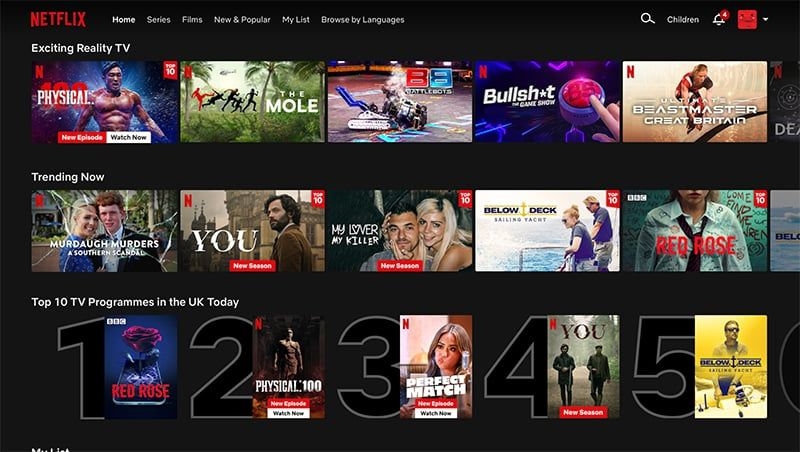
Netflix often feels easier to browse and decide what to watch. Credit: Lyndsey Burton/Choose.co.uk
Netflix's interface is often seen as more intuitive for discovering new programmes, with clearer browsing pathways between series, episodes and recommendations. Many users find this approach makes it easier to explore content without deep menu diving.
Amazon Prime Video's interface provides powerful filtering and search tools, but the experience can feel more fragmented because it mixes included content with rental titles and add-on channels, which can interrupt the browsing flow.
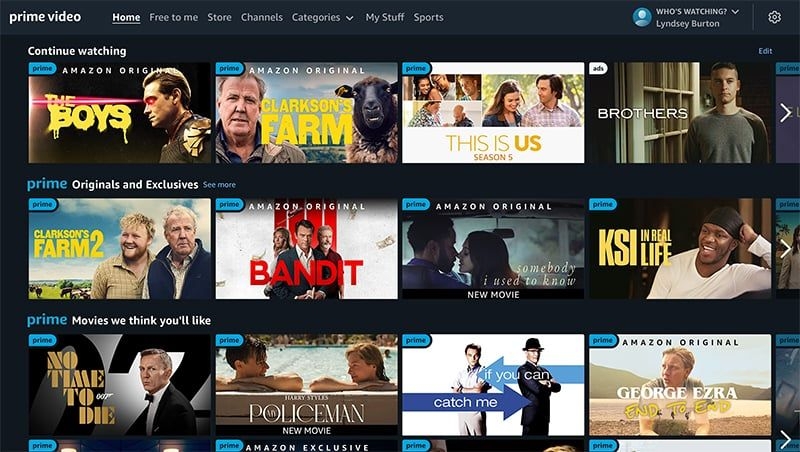
Browsing on Amazon Prime Video can feel more frustrating, with many movies or shows gated behind pay per view or additional subscriptions. Credit: Lyndsey Burton/Choose.co.uk
According to Ofcom's Media Nations 2025 report, Netflix remains the most widely used subscription video-on-demand service in the UK, with higher household penetration and a larger share of total SVOD viewing than Amazon Prime Video - trends that correlate with stronger overall satisfaction and perceived ease of use from audiences.
| Netflix (SVOD penetration) | Amazon Prime Video (SVOD penetration) | |
|---|---|---|
| UK households subscribed (Q1 2025) | ~59% | ~46% |
| Proportion of total SVOD viewing (2024) | Over half | Less than Netflix |
These figures reflect broader viewing patterns: Netflix accounts for nearly six out of ten UK SVOD households and continues to hold the largest share of on-demand viewing time, while Prime Video is solidly established but sits behind in overall take-up and share.
Overall, Netflix offers a smoother and more straightforward browsing and discovery experience than Amazon Prime Video. While both platforms are easy to use on modern TV hardware, Netflix's clearer interface and recommendation flow make it easier for many viewers to find new content.
Content catalogue
Winner: Netflix. While both services offer large libraries, Netflix still provides the broader all-inclusive catalogue, with more original series and fewer pay-extra titles.
Netflix continues to offer the larger overall catalogue of included content, with an estimated 40,000+ hours available to UK subscribers, compared with a smaller core catalogue on Amazon Prime Video.
Netflix's biggest strength remains its extensive slate of Netflix Originals, which are included at every subscription tier (aside from advertising differences). These span a wide range of genres, from big-budget drama and global hits to documentaries and reality formats.
Recent and well-known Netflix Originals include:
- Stranger Things
- The Crown
- Bridgerton
- Squid Game
- Wednesday
- Ozark
- Don't Look Up
Amazon Prime Video also produces exclusive Amazon Originals, with a stronger emphasis on fewer, higher-budget series rather than breadth. Many of these have been critically successful and have long episode runs.
Notable Amazon Originals include:
- The Boys
- Gen V
- Good Omens
- The Lord of the Rings: The Rings of Power
- The Marvelous Mrs Maisel
- The Grand Tour
However, Prime Video increasingly blends its subscription catalogue with paid rentals, purchases and add-on channels. As a result, users will often encounter films or series that require an extra payment or an additional subscription, even when browsing within the Prime Video app.
This makes Prime Video feel less "all-in" than Netflix, where everything surfaced within a tier is included in the monthly price.
In terms of live or event-based content, Amazon Prime Video no longer holds UK Premier League football rights. Its live sports output is now more limited and focused on occasional events rather than regular fixtures.
Netflix, by contrast, has begun experimenting with live programming and sports-adjacent events, including one-off boxing matches, live comedy specials and special event broadcasts. These are not yet a core part of its offering, but they mark a clear shift toward broader live content experimentation.
Overall, Netflix offers the larger and more straightforward content catalogue for most households, particularly those looking for included series and films without additional costs. Amazon Prime Video remains attractive for viewers who value specific Originals or who already benefit from Prime's wider ecosystem, but its content mix is less consistently inclusive.
HD & 4K Ultra HD streaming
Winner: Amazon Prime Video. Ultra HD (4K) is included as standard where available, while Netflix requires a Premium subscription for 4K viewing.
Amazon Prime Video offers Ultra HD (4K) streaming at no extra cost, provided the programme supports it and the customer's TV and streaming device are compatible. Ultra HD and HDR titles are clearly labelled within the Prime Video interface and can be found by searching for "Ultra HD".
Most Prime Video content is available in full 1080p HD, with selected newer and higher-budget titles - such as The Boys and The Lord of the Rings: The Rings of Power - available in 4K HDR.
Netflix now provides 1080p HD as standard across its lower tiers following its October 2022 update, but Ultra HD and HDR content remain exclusive to the Premium plan, which currently costs £18.99 per month.
Netflix titles that support 4K are labelled accordingly, and customers can find compatible content by searching for "4K" or "Ultra HD" within the app.
To stream in HD or Ultra HD, customers will need a compatible HD or Ultra HD TV, along with a supported smart TV app, streaming stick or set-top box. Both services typically recommend broadband speeds of around 15-20Mbps for stable 4K streaming.
Overall, Amazon Prime Video offers better value for households prioritising 4K and HDR viewing, as these features are included by default, while Netflix charges a premium for access to its highest picture quality.
Verdict: Netflix or Amazon Prime Video?
Overall verdict: Netflix remains the stronger all-round streaming service for most households, thanks to its larger catalogue, broader range of exclusive originals, and increasingly central role within UK pay TV bundles.
Netflix offers a more consistent "all-in" subscription experience, with fewer rental prompts and a browsing interface that makes it easier to discover new shows and films. Its Originals output remains a major draw, spanning drama, documentaries, reality TV and global hits that are widely discussed and culturally visible.
Another factor in Netflix's favour is how widely it is now treated as a default household service. Netflix is included as standard in many pay TV bundles from providers such as Sky, Virgin Media and BT/EE, meaning a growing number of households receive it as part of a wider TV subscription rather than choosing it as a standalone add-on.
Amazon Prime Video takes a different approach. While it offers good picture quality - including Ultra HD at no extra charge - and a strong selection of original series, its catalogue increasingly blends included content with rentals, purchases and additional subscriptions. Prime Video is also rarely included at no extra cost within pay TV bundles, remaining more closely tied to Amazon's wider retail and Prime ecosystem.
That said, Amazon Prime Video can represent good value for households that already make regular use of Amazon services, as the video platform sits alongside delivery benefits, Prime Music and other extras within a single subscription.
Ultimately, many UK households subscribe to both services, using Netflix as a core entertainment platform and Prime Video as a complementary service. For those choosing just one, Netflix is likely to suit viewers who want a straightforward streaming experience with a wide range of included content, while Prime Video may appeal more to existing Amazon customers looking to maximise overall value.
Read more about the best streaming services in the UK.