
Sky Glass Air is Sky's more affordable alternative to Sky Glass - a slimline 4K smart TV with the Sky box built in, no satellite dish required.
It drops the integrated soundbar of the standard Glass set in favour of a lighter chassis and a lower price, while keeping the same Sky OS, voice remote, and access to the full range of Sky TV plans.
Whether it's worth it depends on how much you value sound quality - and whether the saving over Sky Glass justifies the step down in audio hardware.
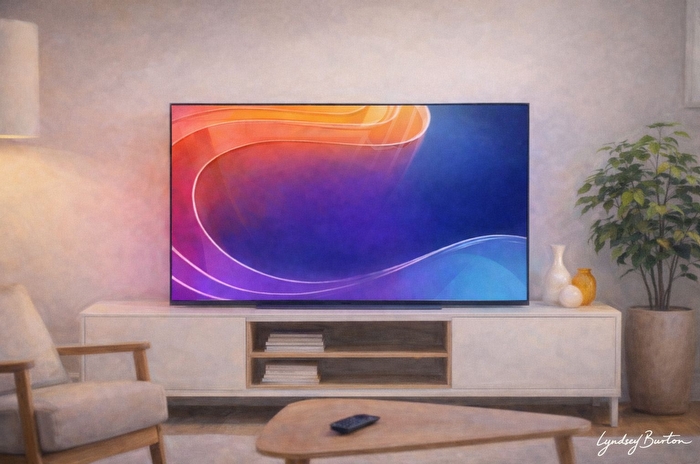
Quick answer: Sky Glass Air - key facts
Sky Glass Air is a 4K smart TV with a built-in Sky box, sold by Sky on a monthly repayment plan or upfront. It streams live Sky TV and Freeview over broadband - no satellite dish or TV aerial required.
It's the more affordable version of Sky Glass, trading the integrated Dolby Atmos soundbar for a lighter plastic chassis and stereo speakers, while keeping the same Sky OS, voice remote, and access to all Sky TV plans.
Sky Glass Air starts from £309 for the 43-inch model, with interest-free payment options available - visit Sky's website for current pricing.
Sky Glass Air is best for: those who want an all-in-one 4K smart TV with Sky built in, at less than half the price of Sky Glass.
Sky Glass Air at a glance
| Sky Glass Air | |
|---|---|
| Display | 4K HDR Quantum Dot |
| Resolution | 3840 x 2160 |
| HDR | Dolby Vision, HDR 10, HLG |
| Speakers | 2 x 15W stereo, Dolby Audio |
| Sound output | 30W |
| Voice control | Bluetooth remote with voice control |
| Ports | 3 x HDMI 2.1, 1 x USB-C, 1 x USB-A |
| Bluetooth | 5.0 |
| Connectivity | WiFi 6 (802.11ax) |
| Colours | Carbon Grey, Cotton White, Sea Green |
| Sizes | 43", 55", 65" |
| Multiroom | Via Sky Stream Puck (Whole Home) |
| Storage | 1,000 hours in the cloud |
| Pros | Cons |
|---|---|
| Less than half the price of Sky Glass | Requires minimum 25Mbps broadband, or 30Mbps for Ultra HD |
| 4K HDR Quantum Dot display | No Dolby Atmos support |
| Built-in Sky box - no satellite dish or aerial needed | Extra £6/month for Ultra HD content |
| Sky TV in HD as standard | Sky TV and streamed Freeview require an active Sky subscription |
| Wall-mountable, lightweight design | Plastic chassis rather than aluminium |
| Package | TV | Monthly price | Upfront price | Contract term | |
|---|---|---|---|---|---|
 |
Sky Essential TV for Sky Glass Air | Discovery+ Netflix Sky Atlantic Sky Entertainment |
£15 | Free | 24 months |
Offer: Sky Glass Air cost not shown Price may change during the minimum term | |||||
|
Sky Ultimate TV for Sky Glass Air | Discovery+ Disney+ Hayu HBO Max Netflix Sky Atlantic Sky Entertainment |
£24 | Free | 24 months |
Offer: Sky Glass Air cost not shown + Sky Ultimate TV £11/mth off Price may change during the minimum term | |||||
What is Sky Glass Air?
Sky first announced Glass Air in February 2025, launching it in June 2025 at less than half the price of the standard Glass, starting at £309 outright or £6 a month with an interest-free payment option from Sky.
At £309 for the 43-inch model, that puts it broadly in line with comparable 4K QLED smart TVs from Samsung and Hisense, which currently range from around £299 to £430. Those sets don't require a subscription to function fully, and many include Dolby Atmos - so what you're paying for with Glass Air is the built-in Sky box and Sky OS, not the hardware alone.
Despite the lower price, Glass Air still has a 4K Ultra HD Quantum Dot display with HDR support. The Sky OS and voice-controlled remote are identical to Glass Gen 2.
The main differences are in the hardware. Glass Air uses a VA panel with global dimming rather than the local dimming found on Glass Gen 2 - meaning the screen is less precise at controlling brightness across different zones, which can affect contrast in dark scenes.
The integrated Dolby Atmos soundbar is also gone, replaced by two 15W stereo speakers with Dolby Audio support. That's adequate for everyday viewing, but noticeably less immersive than the seven-speaker system on Glass Gen 2.
The switch to a recycled plastic chassis rather than anodised aluminium is the main reason the 43" model weighs just 6.3kg without a stand - making it considerably easier to wall-mount than the 9.7kg Glass Gen 2.
Despite these changes, Glass Air supports the same Sky TV plans - Essential TV and Ultimate TV - as well as the same 29+ apps, including Netflix, Disney+, Apple TV+, Paramount+, Amazon Prime Video, and Hayu.
How does Sky Glass Air work?
Setup
Sky Glass Air is a self-install product - no engineer visit required. The set arrives by courier, slots onto its stand, and connects to your home broadband over WiFi. One power cable is all that's needed, and the Sky OS setup wizard walks you through the rest.
Unlike a traditional Sky set-top box, Glass Air is purchased outright rather than loaned. Customers pay either upfront or spread the cost over an interest-free period through Sky.
Broadband and connectivity
Glass Air connects over WiFi 6 (802.11ax). Sky's standard Broadband Hub is a WiFi 5 device - capable enough for reliable Sky TV streaming, but not matched to Glass Air's WiFi 6 capability. The Sky Max Hub is WiFi 6 and comes as standard with Sky's full fibre plans, or can be added via the WiFi Max add-on for £4 a month on other packages.
For the most stable connection, Glass Air also has a wired Fast Ethernet port (10/100Mbps). That's more than sufficient - Glass Air's maximum streaming demand is around 30Mbps - and the main benefit of using Ethernet over WiFi is consistency rather than speed. It's worth considering in larger homes or properties where the TV is some distance from the router.
Sky recommend a minimum download speed of 25Mbps for standard viewing and 30Mbps for Ultra HD or multiroom. In practice, a full fibre connection is the most reliable fit - part-fibre (FTTC) broadband can introduce buffering during peak hours when line speeds fluctuate, which matters more for a streaming-only TV with no local tuner fallback. Glass Air works with any broadband provider, though bundle discounts are available for Sky broadband customers.
Freeview
Glass Air has a built-in aerial input and DTT tuner, but most customers won't need it. With an active Sky subscription, Freeview channels are streamed over broadband and appear directly in the Sky EPG - no aerial or satellite dish required.
The aerial input functions as a backup. If the broadband goes down, connecting a TV aerial gives access to Freeview channels via the DTT app. Unlike the original Sky Glass, where customers had to toggle WiFi off to access DTT, this has been fixed on Glass Air and Glass Gen 2 - the DTT app is available whether WiFi is connected or not.
Customers in flats, conservation areas, or properties where a dish or aerial can't be fitted can use Glass Air just as well as anyone else, provided they keep an active Sky subscription. Without one, Freeview via aerial is the only way to watch live TV.
Sky OS and apps
Sky OS is the operating system that runs on Glass Air - the same platform used on Sky Glass Gen 2 and Sky Stream. It functions as a single interface that brings together live Sky TV, on-demand content, and third-party streaming apps in one place, with no need to switch between inputs or separate app stores.
The interface is built around a personalised home screen with content rails that learn viewing habits over time. A Playlist feature works as a unified watchlist - shows and films can be saved from Sky and third-party apps into one list, regardless of where the content lives. Search works across the whole platform, so looking up a show will surface it whether it's on Sky Atlantic, Netflix, Disney+, or any other connected app.
Glass Air comes with a backlit Bluetooth remote with a built-in microphone button. The TV also has far-field microphones built in, so the "Hello Sky" wake phrase works hands-free without touching the remote. In practice, the far-field mics can struggle to pick up the wake phrase when the TV volume is raised - at higher volumes the remote's microphone button is more reliable.
Voice control works across search, channel switching, app launching, playback, and volume. It can be disabled in settings for anyone who'd rather not have the TV always listening.
Glass Air supports 29+ apps including Netflix, Disney+, Prime Video, Apple TV+, Paramount+, Discovery+, Hayu, BBC iPlayer, ITVX, Channel 4, My5, YouTube, and Spotify. Sky OS receives regular over-the-air updates - recent additions include programme reminders, a Sky remote app for iOS and Android, and audio description for on-demand content.
One notable absence is a NOW app. Sky has chosen not to include it - customers who want NOW alongside Glass Air would need a separate streaming device connected via HDMI.
The display: how does it compare?
Glass Air uses a 4K VA panel with a quantum dot filter and global dimming backlight. The Quantum Dot filter delivers vivid, punchy colours, but the backlight adjusts as a whole rather than in zones, which limits how precisely contrast can be controlled in scenes with mixed light and dark areas.
For everyday viewing - sport, drama, daytime TV - the picture performs well in normal room lighting, with smooth motion and strong colour. Sky OS's auto-enhance feature adjusts picture and sound settings based on content type, and there are dedicated modes for Sport, Movies, Music, Vivid, and Extra Vivid.
The limitations show most clearly in darker HDR content. Without local dimming, peak highlights can't be as tightly controlled, which can give some scenes a flatter look compared to sets at a higher price point. Bright, daylit content - sport in particular - shows the panel at its best.
There's also a viewing angle consideration. VA panels deliver their best contrast when viewed straight on. Move noticeably off-axis and colours shift and contrast drops - worth bearing in mind if seating in your room is well to the side of the screen rather than in front of it.
The 60Hz panel and lack of VRR mean it won't satisfy dedicated gamers - input lag is manageable for casual play, but fast-paced competitive gaming or anything that benefits from high frame rates will be better served by a TV built with gaming in mind. For TV and film viewing it makes no practical difference.
Sound and external speakers
Glass Air's two 15W stereo speakers are decent for everyday viewing - clear dialogue and reasonable volume - but a significant step down from the seven-speaker Dolby Atmos system on Glass Gen 2. There's no Dolby Atmos decoding, though Dolby Digital+ is supported.
Glass Air has an optical digital audio output and HDMI eARC on HDMI 2, so connecting an external soundbar or speaker system is straightforward. The flat-backed, wall-mountable design means a soundbase tends to be a better fit than a traditional soundbar, which can obstruct the screen.
Whole Home and multiroom
Glass Air works with Sky's Whole Home service, which extends Sky TV to other rooms via Sky Stream Pucks. Whole Home costs £12 a month for new customers (£15 standard price) and includes one Stream Puck. Additional pucks cost £39.95 each, up to a maximum of six per household.
Up to three Sky Glass TVs can also be registered per account, meaning a total of nine rooms or devices can share the Sky TV account.
Whole Home requires a minimum broadband speed of 30Mbps, with an additional 5Mbps per Puck added. You can check your broadband speed with our free tool.
Viewing experience
The strongest argument for Sky Glass Air over a cheaper smart TV isn't the hardware - it's Sky OS. Where most smart TV platforms ask you to navigate between separate apps, Sky OS brings everything into a single interface. Live Sky channels, on-demand content, Netflix, Disney+, Prime Video, Apple TV+, and the rest all surface together on one home screen.
The interface is built around a series of personalised rails - Top Picks, Continue Watching, genre collections - that update based on viewing history. Sky OS learns over time, and the more you use it, the more relevant those recommendations become. There are over 30 genre rails on the homepage, all personalised.
Continue Watching is one of the most practical features. It tracks where you left off across Sky, Netflix, Disney+, HBO Max, and Hayu in a single rail on the home screen - so picking up a half-watched Disney+ series or an on-demand Sky show is a one-click action rather than a hunt through individual apps. This cross-platform tracking is relatively recent and marks a meaningful step up from how most smart TV platforms handle multi-service viewing.
Playlist is Sky OS's unified watchlist. Shows and films from any app or channel can be saved to Playlist from anywhere in the interface, and the list syncs across all Sky Glass devices on the same account. If you have Glass Air in the living room and a Stream Puck in the bedroom, your Playlist follows you. Sky OS is also smart enough to track new episodes of a series automatically - even if a show moves between streaming platforms, it stays in your Playlist.
Sky OS supports individual Personalised Playlists - effectively user profiles, allowing each member of the household to have their own watchlist, recommendations, and viewing history. A shared household view remains the default when no profile is selected, and child profiles are also supported. It's a less prominent implementation than the profile-switching you'd find on Netflix or Disney+, but it covers the basics for most households.
Search and voice control work across the entire platform. Saying "Hello Sky, play Succession" will find it regardless of whether it's on Sky Atlantic, HBO Max, or any other connected service. Genre searches work the same way - "Hello Sky, find crime dramas" pulls results from across the platform rather than from one app at a time.
One thing Sky OS doesn't have is advertising. Unlike Amazon's Fire TV, which surfaces sponsored content throughout the interface, Sky OS is clean - recommendations are editorially driven rather than paid placement.
Cloud recording works via a Series Link system. Shows can be saved to a cloud-based playlist rather than a physical hard drive, with up to 1,000 hours of storage. Recordings aren't permanent - content is subject to rights limitations and availability windows - but for most everyday viewing it functions like a standard series record feature.
Sky Glass Air app support
Sky Glass Air runs on Sky OS, giving access to live TV, on-demand content, and 29+ streaming apps in a single interface. Content is organised by programme rather than source, so live channels, catch-up, and app content all surface in the same guide.
The apps available on Sky Glass Air are:
| Netflix | Prime Video | Disney+ | Paramount+ | Discovery+ |
| HBO Max | Apple TV+ | Hayu | Amazon Music | Spotify |
| YouTube | RadioPlayer | BBC iPlayer | ITVX | Channel 4 |
| My5 | STV Player | BBC Sounds | Crunchyroll | Fiit |
| Global Player | GolfPass | MVmnt | Play.Works | Sky Kids Games |
| Sky Sports+ | U | Xumo Play | DAZN |
Netflix (Standard with Ads) and Discovery+ Entertainment are included with all Sky TV plans, including the cheapest Sky Essential TV. Disney+ (Standard with Ads) and Paramount+ Basic (with ads) are both included with the Sky Cinema add-on.
Sky Ultimate TV also adds Disney+ (Standard with Ads), HBO Max (Basic with Ads), and Hayu alongside additional premium live channels. All other apps require their own subscriptions.
For a full breakdown of what's included see our main guide to the streaming apps available on Sky TV.
Sky Glass Air specifications
| Sky Glass Air | |
| Panel type | VA, global dimming |
| Resolution | 3840 x 2160 (4K UHD) |
| HDR formats | Dolby Vision, HDR10, HLG |
| Sound output | 30W (2 x 15W) |
| Ports | 3 x HDMI 2.1 (HDMI 2 with eARC), 1 x USB-C (15W), 1 x USB-A 2.0 (5W), Optical audio out, RF aerial input |
| Ethernet | Fast Ethernet (10/100Mbps) |
| Bluetooth | 5.0 |
| WiFi | WiFi 6 (802.11ax) |
| Weight (43", no stand) | 6.3kg |
| Weight (43", with stand) | 8.85kg |
| Chassis | Post-consumer recycled plastic |
| Energy rating | F (43"), F (55"), F (65") |
Sizes and colours
Glass Air is available in three sizes - 43", 55", and 65" - and three colours: Carbon Grey, Cotton White, and Sea Green. The slim bezel means the colour is most visible on the stand rather than the frame itself.
Energy and sustainability
Sky has focused on recycled materials throughout - the chassis uses plastic resin with 30% post-consumer recycled content, and 100% recycled tin solder paste is used on the circuit boards. Packaging is fully recyclable with no single-use plastic.
The energy efficiency ratings of F across all three sizes aren't strong, but represent an improvement over the first-generation Sky Glass. The set uses less than 0.5W in standby. HDR viewing draws significantly more power than SDR, which is worth bearing in mind for the energy conscious.
How much does Sky Glass Air cost?
Sky Glass Air is less than half the price of Sky Glass Gen 2, and can be purchased outright or spread across a monthly repayment plan. The outright prices are:
| 43" | 55" | 65" | |
| Pay in full | £309 | £509 | £649 |
Monthly repayment options are available over 24 or 48 months. Full terms, eligibility, and credit information are available directly from Sky.
In comparison, Sky Glass Gen 2 starts at £699 for the 43-inch model - more than double the entry price of Glass Air.
All purchases include a two-year warranty and free standard delivery. A 31-day cooling-off period applies, though returning the set within this period carries a £25 fee.
Sky Glass Air with Sky TV
Sky Glass Air must be purchased alongside an active Sky TV subscription. Two plans are available for new customers: Sky Essential TV and Sky Ultimate TV. Both are available on a 24-month term or a 31-day rolling subscription, with the rolling option costing more each month.
The prices below show the TV plan cost when taken with Sky Glass Air - the cost of the Glass Air set itself is added on top, with outright and monthly payment options available directly from Sky.
| Package | TV | Monthly price | Upfront price | Contract term | |
|---|---|---|---|---|---|
|
Sky Essential TV for Sky Glass Air | Discovery+ Netflix Sky Atlantic Sky Entertainment |
£15 | Free | 24 months |
Offer: Sky Glass Air cost not shown Price may change during the minimum term | |||||
|
Sky Ultimate TV for Sky Glass Air | Discovery+ Disney+ Hayu HBO Max Netflix Sky Atlantic Sky Entertainment |
£24 | Free | 24 months |
Offer: Sky Glass Air cost not shown + Sky Ultimate TV £11/mth off Price may change during the minimum term | |||||
Sky Essential TV is Sky's entry-level plan at £15 a month on a 24-month term. It includes Sky Atlantic, Netflix Standard with Ads, Discovery+ Entertainment, and over 100 live channels - a capable starting point that covers the core Sky and streaming content without the full Sky Entertainment lineup.
Sky Ultimate TV adds the broader Sky Entertainment channel range - Sky One, Sky Comedy, Sky Documentaries, Sky Crime, Sky Witness, National Geographic, and others - alongside Disney+, HBO Max, and Hayu. At £24 a month on a 24-month term for new customers, it's £9 more than Essential TV and bundles streaming services worth over £20 a month separately.
Both plans can be expanded with the same add-ons at identical prices:
- Sky Sports: £20/month on a 24-month term, £27/month rolling
- Sky Cinema: £10/month on a 24-month term, £13/month rolling - includes Disney+ and Paramount+ at no extra cost
- TNT Sports: £28/month for new customers with Sky, £34/month standard rolling price
- Sky Kids: £8/month rolling
- Ultra HD and Dolby Atmos pack: £6/month rolling
- Ad skipping: £5/month for new customers, £6/month standard rolling price
Sky also allows some add-ons on flexible 31-day terms even when the base plan is on a 24-month contract - useful for adding Sky Sports around a tournament or Sky Cinema for a specific period without a long-term commitment.
Sky Glass Air with Sky broadband
Bundling Sky broadband reduces the cost of Sky's full fibre plans significantly compared to taking broadband on its own.
| Package | TV | Broadband | Monthly price | Upfront price | Contract term | |
|---|---|---|---|---|---|---|
|
Sky Essential TV for Sky Glass Air + Full Fibre 300 | Discovery+ Netflix Sky Atlantic Sky Entertainment |
300Mb 40Mb upload |
£35 | Free | 24 months |
Offer: Sky Glass Air cost not shown + Reduced price broadband Price may change during the minimum term | ||||||
|
Sky Ultimate TV for Sky Glass Air + Full Fibre 300 | Discovery+ Disney+ Hayu HBO Max Netflix Sky Atlantic Sky Entertainment |
300Mb 40Mb upload |
£41 | Free | 24 months |
Offer: Sky Glass Air cost not shown + Sky Ultimate TV £14/mth off + Cheaper broadband with Sky TV Price may change during the minimum term | ||||||
Sky Full Fibre 300 drops to £20 a month when bundled with Glass Air and a Sky TV plan, compared to £28 taken standalone - a saving of £8 a month.
The broadband saving is consistent regardless of whether Essential TV or Ultimate TV is chosen - the £9 gap between the two plans stays the same across all bundle tiers.
For more on Sky's broadband plans, see our main Sky broadband review.
Verdict: Is Sky Glass Air any good?
Sky Glass Air does what it sets out to do. It brings the full Sky OS experience - intuitive interface, unified search, cross-platform Continue Watching, voice control - into a 4K smart TV that costs less than half the price of Sky Glass Gen 2. For anyone who wants Sky TV built into a new TV set, without a satellite dish, it's a genuinely strong proposition.
The compromises are real but predictable. The VA panel with global dimming delivers a good picture for everyday viewing - sport and drama in a normally lit room both look strong - but it can't match the contrast precision of local dimming panels at a similar price point. The stereo speakers are adequate but thin, and Dolby Atmos is absent entirely. Both are manageable: you can add a soundbar via HDMI eARC.
The 60Hz panel and lack of VRR mean fast-paced competitive gaming could be better served by a TV built with gaming in mind, although for most viewers it makes no practical difference.
The plastic chassis is a practical trade-off rather than a flaw - it makes the set light enough to wall-mount without much effort, and the three colour options mean it doesn't look budget.
Where Glass Air earns its price is the platform. Sky OS is one of the better smart TV experiences available, and the integration of Netflix, Disney+, HBO Max, and Hayu into a single searchable interface - with Continue Watching working across all of them - is something most competing platforms can't match. That's what you're paying for, more than the hardware.
Choose Sky Glass Air if:
- You want Sky TV without a satellite dish or set-top box
- You're happy to add your own soundbar or can live with stereo audio
- You want a wall-mountable, lightweight 4K TV at a reasonable outright price
- You're already considering Sky broadband, where bundle discounts make the overall package more competitive
Consider Sky Glass Gen 2 instead if built-in Dolby Atmos sound matters, or Sky Stream if you already own a TV you're happy with and just want the Sky platform.