BT launched the Smart Hub 3 in May 2026, replacing the Smart Hub 2 after almost eight years as its main broadband router.
The new model brings WiFi 6, improved security and new Complete Wi-Fi Plus extenders, while Hybrid Connect provides 4G backup if the fixed connection goes down.
Here, we look at BT's current router range, how the different models compare, and whether existing customers should consider upgrading.
Which BT router will I get?
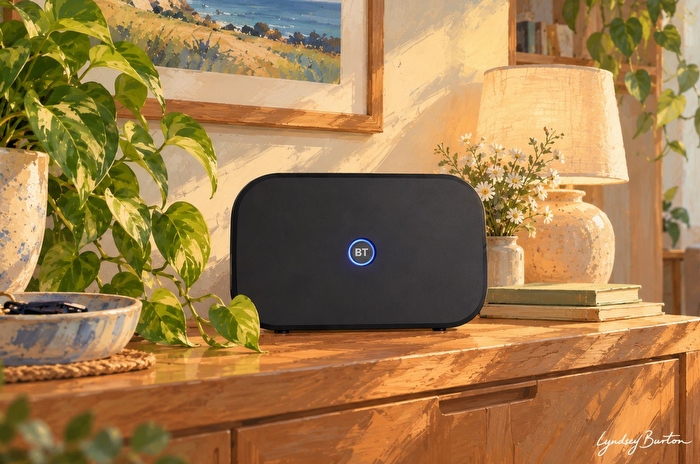
New BT broadband customers are supplied with the Smart Hub 3, which replaced the Smart Hub 2 in May 2026. It's included as standard with both part-fibre and full-fibre packages.
Existing customers can continue using the Smart Hub 2 and won't necessarily receive the newer router when renewing or changing their broadband package.
Customers taking Complete Wi-Fi Plus receive the Smart Hub 3 with BT's newer WiFi 6 extenders, while existing Complete Wi-Fi customers may still use the Smart Hub 2 with the older WiFi discs.
BT router comparison
BT has three main Smart Hub models still likely to be found in customers' homes: the latest Smart Hub 3, the Smart Hub 2, and the original Smart Hub.
The Smart Hub 2 and original Smart Hub are actually very similar in their core WiFi hardware, with both using dual-band WiFi 5, seven antennas and four Gigabit Ethernet ports. The Smart Hub 2's main additions were support for services including Digital Voice and Complete Wi-Fi.
The Smart Hub 3 is the first substantial wireless upgrade, moving to WiFi 6 while retaining seven antennas and four Gigabit Ethernet ports. It also adds a 2.5Gbps WAN connection, WPA3 security and support for the newer Complete Wi-Fi Plus system.
| Feature | Smart Hub 3 | Smart Hub 2 | Smart Hub |
|---|---|---|---|
| Released | 2026 | 2018 | 2016 |
| WiFi | WiFi 6 | WiFi 5 | WiFi 5 |
| Bands | Dual-band | Dual-band | Dual-band |
| Antennas | 7 | 7 | 7 |
| 2.4GHz | 3x3 | 3x3 | 3x3 |
| 5GHz | 4x4 | 4x4 | 4x4 |
| Ethernet | 4 x Gigabit | 4 x Gigabit | 4 x Gigabit |
| WAN | 2.5Gbps | Gigabit | Gigabit |
| WiFi security | WPA3 | WPA2 | WPA2 |
| Digital Voice | Yes | Yes | No |
| Whole-home WiFi | Complete Wi-Fi Plus | Complete Wi-Fi | No |
| Hybrid Connect | Yes | Yes | No |
The biggest difference is therefore between the Smart Hub 3 and everything before it. Smart Hub 2 added useful BT services, but Smart Hub 3 is the model that materially updates the underlying wireless technology.
BT Smart Hub 3
Released in May 2026, the BT Smart Hub 3 replaced the ageing Smart Hub 2 as BT's latest broadband router, bringing WiFi 6 to BT customers for the first time.
The Smart Hub 3 upgrades the wireless technology from WiFi 5 to WiFi 6 (802.11ax), while retaining seven internal antennas. It uses 3x3 wireless on 2.4GHz and 4x4 on 5GHz, with four Gigabit Ethernet ports for wired devices.
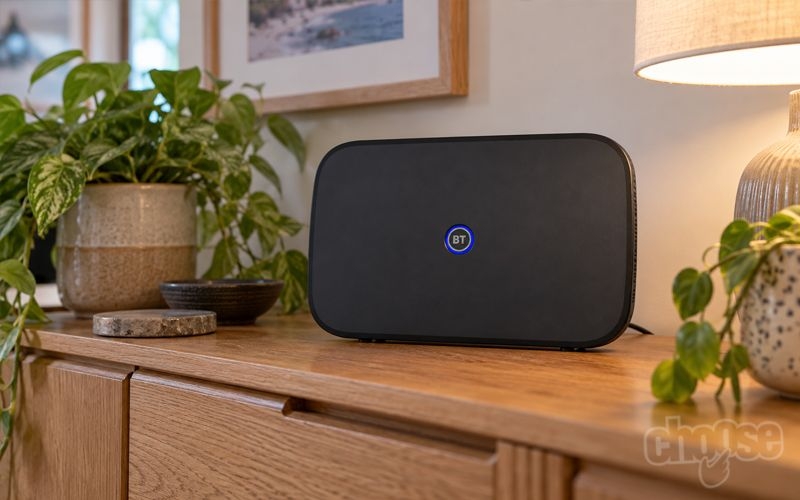
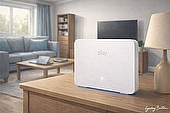
BT Smart Hub 3 router (released May 2026). Credit: Choose.co.uk
Security was a major part of the 2026 upgrade too. The Smart Hub 3 supports WPA3 and introduces Hub Threat Protect, which operates at router level to identify and block malicious traffic before it reaches connected devices.
There's also a dedicated 2.5Gbps WAN port for full fibre connections, although the four LAN ports remain limited to Gigabit Ethernet.
| Feature | Smart Hub 3 | Smart Hub 2 |
|---|---|---|
| Release date | 2026 | 2018 |
| WiFi protocol | WiFi 6 (802.11ax) | WiFi 5 (802.11ac) |
| WiFi bands | Dual-band | Dual-band |
| Antennas | 7 | 7 |
| 2.4GHz | 3x3 | 3x3 |
| 5GHz | 4x4 | 4x4 |
| Ethernet ports | 4 x 1Gbps | 4 x 1Gbps |
| WAN | 2.5Gbps | 1Gbps |
| Security | WPA3 | WPA2 |
| Whole-home WiFi | Complete Wi-Fi Plus | Complete Wi-Fi |
The Smart Hub 3 also introduced support for Complete Wi-Fi Plus, replacing the older WiFi 5 discs used with the Smart Hub 2 with new WiFi 6 extenders. This means customers can extend coverage around larger homes without dropping back to the older wireless standard.
BT also redesigned its MyBT app alongside the launch, bringing broadband, connected device and security management together, including controls for Hub Threat Protect.
Hybrid Connect remains supported, providing 4G mobile broadband backup if the fixed connection goes down.
BT initially said the Smart Hub 3 would be supplied to new broadband customers and those still using the original Smart Hub. Existing Smart Hub 2 customers aren't automatically upgraded and need to request the newer router separately.
Overall, the Smart Hub 3 is a much more substantial upgrade than the move from the original Smart Hub to the Smart Hub 2. WiFi 6 improves wireless performance, while WPA3, Hub Threat Protect, Complete Wi-Fi Plus and the 2.5Gbps WAN port make it considerably better suited to BT's faster full fibre packages.
BT Smart Hub 2
Released in 2018, the BT Smart Hub 2 replaced the original Smart Hub and remained BT's main broadband router until the Smart Hub 3 arrived in 2026.
In terms of wireless hardware, however, relatively little changed. Both routers use dual-band WiFi 5, with seven internal antennas configured as 3x3 on 2.4GHz and 4x4 on 5GHz, alongside four Gigabit Ethernet ports.
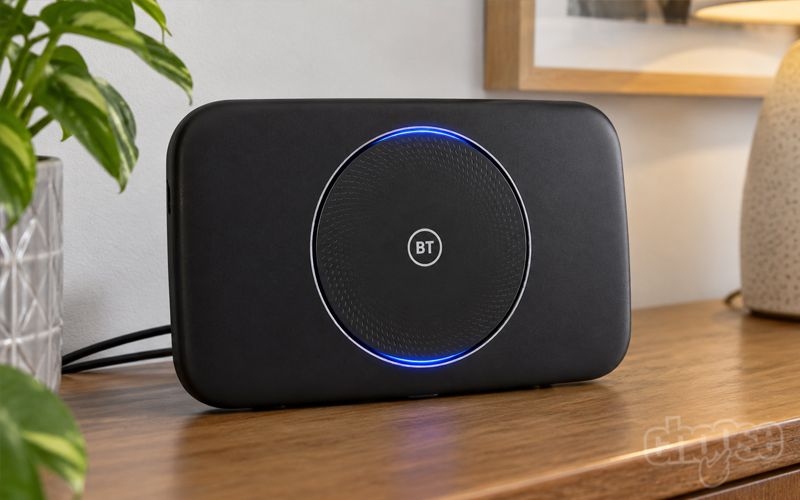
BT Smart Hub 2 router (released November 2018). Credit: Choose.co.uk
The bigger change was the introduction of new BT services, with the Smart Hub 2 adding support for Digital Voice, Complete Wi-Fi and, later, Hybrid Connect. Built-in DECT also allows compatible Digital Voice handsets to connect wirelessly to the router.
| Feature | Smart Hub 2 | Smart Hub |
|---|---|---|
| Release date | 2018 | 2016 |
| WiFi protocol | WiFi 5 (802.11ac) | WiFi 5 (802.11ac) |
| WiFi bands | Dual-band | Dual-band |
| Antennas | 7 | 7 |
| 2.4GHz | 3x3 | 3x3 |
| 5GHz | 4x4 | 4x4 |
| Ethernet ports | 4 x Gigabit | 4 x Gigabit |
| Digital Voice / DECT | Yes | No |
| Complete Wi-Fi | Yes | No |
| Hybrid Connect | Yes | No |
Complete Wi-Fi launched alongside the Smart Hub 2, using additional WiFi discs to create a mesh network and extend coverage around the home. BT claimed the combination could improve WiFi speeds by up to 25%, with customers initially receiving one disc and able to request up to two more where needed.
The Smart Hub 2 hardware was also reused by BT-owned Plusnet for its Hub Two, which launched in 2021. It's essentially a rebranded Smart Hub 2 running Plusnet-specific firmware, with the same seven-antenna, 3x3 2.4GHz and 4x4 5GHz WiFi configuration.
The Hub Two remains Plusnet's current router in 2026, despite BT having now moved on to the WiFi 6 Smart Hub 3.
Overall, the Smart Hub 2 was more of a feature upgrade than a WiFi upgrade over the original Smart Hub. Its underlying wireless specification remained largely unchanged, with the bigger improvements coming from Digital Voice, mesh WiFi and Hybrid Connect support.
BT Smart Hub
Launched in 2016, the original BT Smart Hub replaced the Home Hub 5 and marked BT's move away from the Home Hub branding. It's also sometimes referred to as the Home Hub 6.
It was a substantial router upgrade at the time, introducing seven internal antennas and dual-band WiFi 5, with 3x3 connectivity on 2.4GHz and 4x4 on 5GHz. There are also four Gigabit Ethernet ports and a USB port for wired devices and storage.
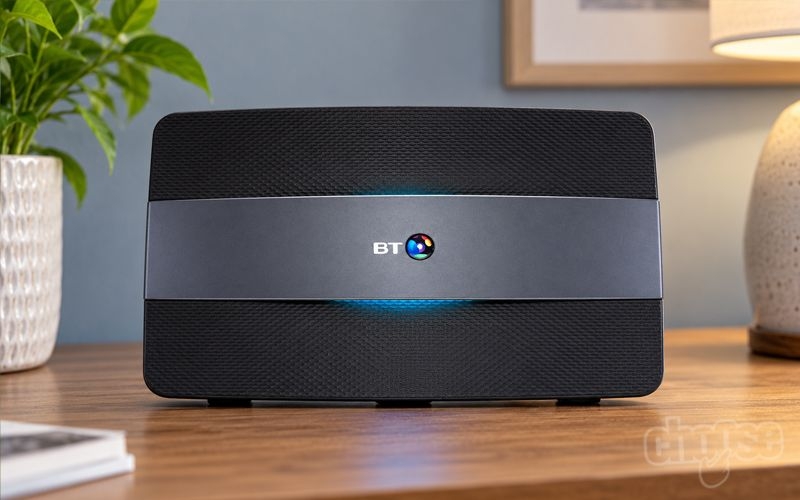
BT Smart Hub router (released 2016). Credit: Choose.co.uk
BT heavily promoted the Smart Hub's wireless coverage when it launched, claiming it offered the most powerful WiFi signal of the major UK broadband providers. Its seven-antenna configuration was unusually capable for an ISP-supplied router in 2016, with particular emphasis placed on maintaining speeds and connections further away from the Hub.
In fact, the underlying WiFi specification proved relatively long-lived. BT retained the same seven-antenna, 3x3 and 4x4 configuration when it introduced the Smart Hub 2 two years later, with that router concentrating more on adding support for newer BT services such as Digital Voice, Complete Wi-Fi and Hybrid Connect.
The original Smart Hub lacks those newer features, but as a standalone WiFi 5 router its specification remains remarkably similar to the Smart Hub 2. Customers still using one therefore have much more to gain by moving directly to the WiFi 6 Smart Hub 3 than they would have had upgrading between BT's first two Smart Hubs.
Expert explainer: Is BT's Smart Hub 3 upgrade already late?
The Smart Hub 3 finally brings BT's standard router up to WiFi 6, eight years after the WiFi 5 Smart Hub 2 launched in 2018.
For BT customers, it's a meaningful upgrade. WiFi 6 offers faster wireless speeds and handles busy networks more efficiently, making it much better suited to Full Fibre 500 and 900, particularly as more phones, laptops and other devices support the newer standard.
But BT is undoubtedly late to WiFi 6. EE has already moved to WiFi 7, while Sky and Vodafone offer WiFi 7 routers with selected packages. WiFi 7 increases capacity considerably, while Multi-Link Operation allows compatible devices to communicate across more than one wireless band at once. Tri-band routers can also use the 6GHz spectrum, adding valuable capacity beyond the increasingly crowded 2.4GHz and 5GHz bands.
For BT customers today, though, the practical gap is smaller. BT's fastest residential package averages 900Mbps, and the Smart Hub 3 can already deliver much of that speed wirelessly under good conditions. WiFi 7 becomes more important with multi-gigabit broadband, demanding home networks and a growing number of compatible devices.
BT has instead made security one of the Smart Hub 3's stronger features. WPA3 itself is no longer unusual, but Hub Threat Protect monitors traffic at router level and automatically blocks suspicious connections, including from smart TVs, cameras and other devices that can't run conventional security software. Together with BT's Cyber Threat Protect and Web Threat Protect services, that gives the Smart Hub 3 a stronger security proposition than its relatively conservative WiFi specification suggests.
The bigger question is how well it will age. WiFi 7 was certified in 2024 and WiFi 8 (IEEE 802.11bn) is already in development, with finalisation expected around 2028. There's an unusual spread within BT Group too: EE has moved to WiFi 7, BT is now on WiFi 6, while Plusnet continues to supply the WiFi 5 Hub Two based on Smart Hub 2 hardware.
For now, WiFi 6 is enough for what BT actually sells. The Smart Hub 3 should comfortably serve its current broadband range, while its security features give it something beyond faster WiFi to offer. The lack of WiFi 7 will matter much more if BT follows its rivals into broadband speeds above 1Gbps, when the extra capacity and multi-gigabit hardware offered elsewhere become genuinely useful rather than simply more future-proof.