Vodafone brings Secure Net Home and Who's Home to standard broadband plans

Vodafone is expanding its Secure Net Home and Who's Home features beyond Pro plans to more broadband customers with the Power Hub router.
The features include network-level security protections alongside router technology designed to detect when household members arrive or leave the home network.
Vodafone said the rollout will make the features available to around 900,000 additional broadband customers over the coming weeks.
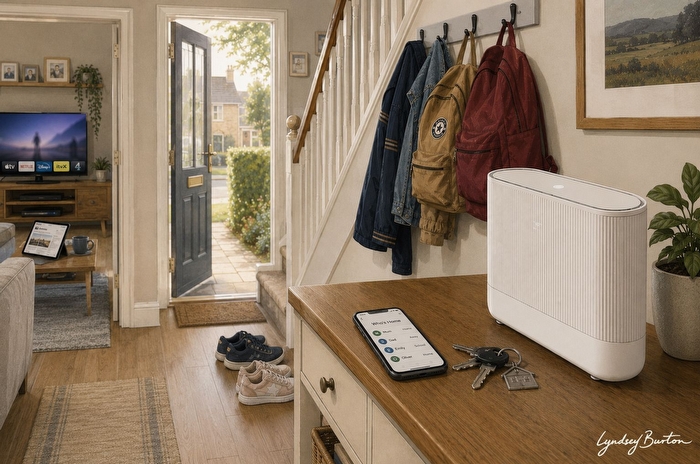
Vodafone Secure Net Home and Who's Home available to more customers
Vodafone is expanding Secure Net Home to eligible standard broadband customers with a Power Hub router, extending the service beyond its Pro 2 and Pro 3 broadband tiers for the first time.
The network-level security platform launched with Vodafone's Pro 2 broadband packages in 2024 and is designed to block malware, phishing attempts and malicious websites across the home network, without requiring software installation on individual devices.
Secure Net Home also includes a parental controls suite with per-child profiles, content filtering, internet pause controls, bedtime schedules and a "Focus Time" setting designed to limit access to distracting websites during homework sessions.
Standard broadband customers gaining access for the first time will receive Secure Net Home free for three months, after which it becomes an optional £2 per month add-on with no contract commitment. The service continues to be included at no extra cost with Vodafone's Pro 3 broadband packages, while existing Pro 2 customers also have the feature bundled into their plan.
Alongside Secure Net Home, Who's Home is also being made available to Pro 2 and standard broadband customers with a Power Hub router, at no extra cost. The feature initially launched for Pro 3 customers in December 2025.
Who's Home uses Wi-Fi connections to tell account holders whether household members are home or away, based on whether their smartphones are connected to the hub. It is managed through the Vodafone Broadband app, with each household member opting in individually via SMS invitation. Users can opt out at any time, with reminder texts sent every three months to confirm consent.
Vodafone said the combined rollout is expected to reach around 900,000 additional broadband customers over the coming weeks.
Is Secure Net Home and Who's Home worth using?
For families, Secure Net Home's biggest advantage is the simplicity of applying network and router-level protections across multiple devices.
The malware and virus protection runs at network level through the router, allowing harmful websites and downloads to be filtered automatically across connected gadgets - including smart TVs, games consoles and tablets that would not normally support dedicated security software.
While network-level filtering protects everything connected to your home hub, it is worth noting that Secure Net Home does not include true, device-level anti-virus software.
Android users do get access to a manual "cleaning tool" app to scan files, but it lacks the active background monitoring of dedicated security software, and other operating systems get no local protection at all.
Because Secure Net Home is designed as a home broadband subscription, the cleaning tool is tied strictly to the home connection: it only runs its cleanup routines when the device is actively connected to the home WiFi network. If an Android device picks up malware while away from home on a public hotspot or mobile data, the app cannot scan or alert you to the threat until you walk back through the front door and reconnect to the router.
The additional parental controls included in Secure Net Home allow parents to create individual profiles for each child and assign specific devices to them, meaning restrictions can be tailored rather than applied across the entire household.
Content filters are customisable by profile, internet access can be paused instantly on a child's devices, and scheduled blackouts can be created for bedtimes or mealtimes.
Vodafone's "Focus Time" mode goes a step further by blocking social media and gaming sites while still allowing access to educational resources - potentially useful during homework periods without cutting off the connection entirely.
At a subscription cost of £24 a year, the value proposition is straightforward for families looking for budget-friendly, router-level parental controls - though it's worth remembering this price doesn't include true, real-time device anti-virus protection and parental controls also only work when devices are connected to the router at home.
Who's Home is narrower in scope, but also simpler to assess. The feature sends an alert when a household member's phone connects to or disconnects from the home WiFi network, while the account holder can also check a live dashboard showing who is currently home or away.
It is likely to be most useful for families with older children who carry smartphones, allowing parents to see when someone has arrived home without needing a check-in message or phone call.
While Who's Home is now included at no extra cost on eligible Power Hub and Ultra Hub broadband plans, the practical benefits may feel less compelling in adult-only households or house shares.
Broadband security products are becoming harder to interpret
Vodafone's expansion of Secure Net Home highlights a broader issue across the UK telecom sector: the increasingly unclear way security products are marketed to consumers.
While parental controls fit naturally within the router environment, the way additional network-level security is presented can become ambiguous, making it easy for consumers to misconstrue the actual limits of what the service does.
Vodafone advertises Secure Net Home as offering "detection and protection against online malware infections and viruses," but what the service actually does is intercept data traffic at the network level to block harmful downloads and redirect users away from known malicious domains.
That distinction isn't obvious from the marketing language, making it easy to interpret the product as offering holistic, device-level protection. A consumer could reasonably assume from the headline descriptions that devices would be covered at all times-whether they encounter threats at home or while using mobile data away from the home network.
Vodafone's own remediation tool reinforces this confusion. The service includes a separate "cleaning tool" for infected devices - but only on Android. Because the app only works when connected to the home WiFi, it doesn't actively protect or scan downloads in real-time on the go. That means a virus could be downloaded and active on a device for any length of time until the device logs onto the home network.
This ambiguity isn't limited to Vodafone. Similar sweeping marketing language can also be found across BT and EE, where basic network-level filtering can be blurred with the standalone device apps included in their optional or bundled add-ons.
Ultimately, this leaves consumers navigating an opaque mix of security features, making it difficult to separate the marketing promises from the actual, technical boundaries of their protection.

We're independent of the products and services we compare.

We order our comparison tables by price or features - never by referral revenue.

We donate at least 5% of net profits to charity, and operate a climate-positive workforce.