Hyperoptic increases annual price rise to £4

Hyperoptic has quietly increased the amount of its annual price rise, raising the fixed yearly increase for new customers from £3 to £4 per month.
The change has taken effect immediately for customers signing up from today, with the first £4 increase due to be applied in April 2026.
It follows recent moves by other broadband providers to increase their flat, pounds-and-pence annual price rises.
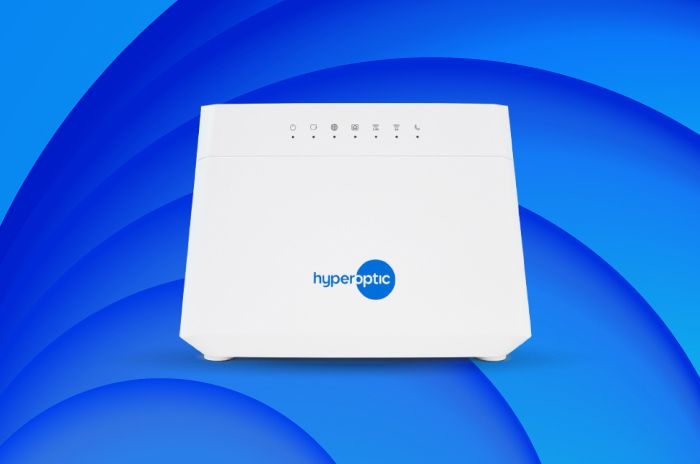
£4 per month, in April each year
Hyperoptic has increased its fixed annual price rise for new customers from £3 to £4 a year.
The change applies to customers taking out a new contract or re-contracting from today, and is written into those contracts immediately.
The annual rise is applied in April of each year during the contract, increasing the monthly price by £4 compared with the previous year.
Under the updated terms, the first £4 increase will be applied in April 2026. For customers on 24-month contracts, a second £4 increase would then be applied in April 2027.
This replaces Hyperoptic's previous £3-per-year fixed annual increase for customers signing up under earlier contract terms.
Existing customers who remain in contract on older terms are not moved onto the new £4 rise unless they re-contract or switch deals.
Fixed rises, wholesale realities
Hyperoptic championed fixed prices until mid-2025, when it moved to a flat pounds-and-pence annual price rise of £3 a year.
The shift came shortly before Hyperoptic announced plans to start reselling access to the Openreach network, expanding beyond its own full-fibre footprint - a move that brought it closer to the pricing realities faced by larger national providers.
The context here is that Openreach applies annual wholesale price rises linked to CPI inflation. That leaves resellers with a choice: absorb future increases themselves, or build them into retail contracts in advance. Hyperoptic has chosen the latter, moving to annual price rises alongside BT, EE, Plusnet and many other Openreach resellers.
The move from £3 to £4 also follows a clear market signal. BT increased its own annual price rise from £3 to £4 in mid-2025, a change that applied across BT and EE and was later followed by Plusnet, Vodafone and TalkTalk - all of which resell Openreach - as well as Virgin Media on its own network.
While pounds-and-pence rises are often framed as a win for transparency, they also change how price risk is shared. Fixed prices no longer rise and fall with inflation, which matters just as much when inflation is easing as when it is rising.
CPI inflation was around 2% in mid-2024 when fixed annual rises were first introduced, rose to around 3.8% in mid-2025 when £4 increases began to appear, and has since eased to around 3.2%. Forecasts from the Office for Budget Responsibility suggest inflation could fall further from 2026 as temporary pressures unwind.
If that happens, customers signing up to contracts with higher fixed £4 rises would continue to pay more each year even as inflation - and wholesale cost pressures - ease.
Drawing attention
The move from £3 to £4 a year may look incremental, but it has sharpened attention on how mid-contract price rises now work in practice.
While inflation-linked increases are now banned, the shift to fixed pounds-and-pence based rises has not ended the debate - but changed it. The question is no longer whether customers are surprised by price rises, but whether they have any real ability to avoid them once they are locked into a contract.
That tension has been pushed back into the spotlight after O2 applied higher fixed rises to existing customers, triggering complaints and political scrutiny. What was once framed as a transparency win is now being questioned as a fairness issue.
That debate has now landed back on Ofcom's desk. Exit rights linked to fixed price rises are currently under review, amid growing concern that clarity alone may not offer meaningful protection as annual increases creep upwards.
For providers, fixed rises remain compliant as long as they are spelled out at the point of sale. For customers, the experience can feel different: prices go up mid-contract, but the ability to walk away does not.
As £4 becomes the new normal, the unresolved question is whether fixed price rises are simply a clearer way to increase bills - or whether they still deliver the balance of certainty and choice that regulators originally intended.

We're independent of the products and services we compare.

We order our comparison tables by price or features - never by referral revenue.

We donate at least 5% of net profits to charity, and operate a climate-positive workforce.
Latest Guides



View more guides