
Sky Ultrafast was a boosted part-fibre broadband plan delivered using G.Fast technology from upgraded street cabinets.
It has now largely been withdrawn as Sky focuses on full fibre plans such as Full Fibre 150, with most non-FTTP areas instead offered Superfast 80.
When available, Ultrafast provided average download speeds of 145Mb and included a digital home phone line and the Sky Broadband Hub.
Sky Ultrafast Broadband at a glance
Status: Sky Ultrafast is a legacy G.Fast broadband plan no longer actively marketed.
| Monthly price | £27 (last available) |
|---|---|
| Setup cost | £5 (Refundable) |
| Minimum term | 24 months |
| Annual price increase | Prices may rise |
| Network availability | Openreach G.Fast (withdrawn) |
| Technology | Part fibre (FTTC) with G.Fast upgrade |
| Download speed | 145Mbps |
| Upload speed | 27Mbps |
| Usage allowance | Unlimited |
| Router | Sky Broadband Hub (WiFi 5) |
| WiFi guarantee | Wall-to-Wall 3Mb minimum per room |
| Parental controls | Sky Broadband Shield |
| Home phone | Included with PAYG calls |
| Anytime calls | £17/mth (inc. UK mobiles) (Price will increase by £1/mth from 1st April 2026) |
| TV | Optional: Sky Stream or Sky Glass |
| Pros | Cons |
|---|---|
| Higher speeds than standard part-fibre (FTTC) where G.Fast was available | No longer actively marketed to new customers |
| Includes digital home phone line as standard | Limited historical availability tied to specific upgraded cabinets |
| Delivered faster speeds in non-FTTP areas before full fibre rollout | Superseded by full fibre plans offering more consistent performance |
What was Sky Ultrafast?
Sky Ultrafast was a part-fibre broadband plan delivered using Openreach's G.Fast technology. Unlike standard fibre-to-the-cabinet (FTTC) services, G.Fast boosted speeds over the existing copper line between the street cabinet and the home.
This allowed Sky to offer average download speeds of 145Mb in certain upgraded areas - significantly faster than the 61-67Mb typically delivered by standard Superfast part-fibre plans.
However, G.Fast had limited rollout and was never expanded nationwide. As Openreach shifted focus to full fibre (FTTP) infrastructure, G.Fast deployment effectively stopped, and Sky moved its attention to full fibre plans instead.
Today, Ultrafast should be viewed as a transitional technology that bridged the gap between traditional part-fibre broadband and modern full-fibre connections.
What replaced Sky Ultrafast?
Sky Ultrafast has largely been replaced by Sky's full fibre (FTTP) broadband range. Where full fibre is available, customers are typically offered plans such as Full Fibre 75 or Full Fibre 150, which deliver more consistent performance over a fibre-to-the-home connection.
In areas that have not yet been upgraded to full fibre, customers are generally offered Sky Superfast 80, which uses standard part-fibre (FTTC) technology.
Because G.Fast rollout has stopped and new cabinets are no longer being upgraded, Ultrafast is not expanding into new locations. As properties move to full fibre, G.Fast services are expected to decline over time.
How fast was Sky Ultrafast?
Sky Ultrafast delivered average download speeds of 145Mb and average upload speeds of 27Mb at peak times (8pm-10pm).
| Average download speed | Average upload speed | |
|---|---|---|
| Sky Ultrafast | 145Mb | 27Mb |
The service used G.Fast technology from upgraded street cabinets. While fibre ran to the cabinet, the final stretch to the home used existing copper lines, meaning performance could still vary depending on distance and line quality.
Although faster than standard part-fibre plans, G.Fast did not match the consistency or scalability of full fibre (FTTP), where fibre runs directly into the property.
Speed guarantee
Sky provided a personalised minimum guaranteed speed at the point of sign-up. If speeds fell below that minimum for three consecutive days and Sky could not resolve the issue within 30 days, customers were able to leave their contract without early termination charges.
Sky also offered a one-month broadband refund if the guaranteed minimum speed was not met. Customers could claim under this guarantee up to twice during their minimum term.
For Ultrafast, minimum guaranteed speeds were typically around 100Mb, although the exact figure depended on individual line conditions.
WiFi guarantee
Sky Ultrafast included the free Wall-to-Wall WiFi Guarantee, which promised minimum wireless speeds of 3Mb in every room or one month's broadband subscription refunded.
Customers could also add Sky Broadband Boost for an additional monthly fee. This included WiFi boosters where required, daily line checks, free off-peak engineer visits and 2GB of Sky Mobile data if the fixed-line connection went down.
While functional, this guarantee was later replaced by Sky's WiFi Max offering on newer plans, which provides higher minimum wireless speed commitments.
Router
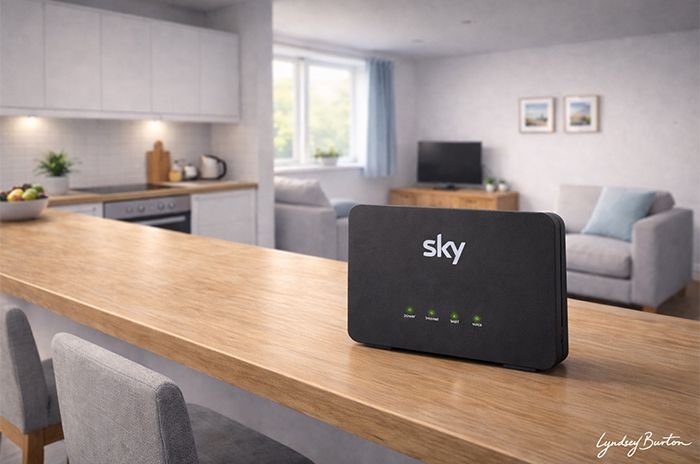
Sky Ultrafast was supplied with the Sky Broadband Hub as standard. This router supports dual-band wireless (2.4GHz and 5GHz) and uses the WiFi 5 (802.11ac) standard.
The Sky Broadband Hub includes four Gigabit Ethernet ports for wired connections and WPA2 security. While capable of handling Ultrafast's 145Mb speeds, it does not support WiFi 6.
Sky's newer Sky Max Hub, which supports WiFi 6, is supplied with full fibre and certain other current plans, but was not included with Ultrafast.
Verdict: What does Sky Ultrafast mean today?
Sky Ultrafast was a transitional G.Fast broadband plan designed to deliver faster speeds in areas that had not yet been upgraded to full fibre. It provided a noticeable boost over standard part-fibre connections, but remained limited by copper cabling between the cabinet and the home.
With G.Fast rollout halted and full fibre expansion continuing across the UK, Ultrafast is no longer actively marketed and has largely been replaced by Sky's FTTP plans and Superfast 80 in non-fibre areas.
For most customers today, the relevant choice will be between a part-fibre Superfast plan or a full fibre plan where available. Ultrafast now represents an interim step in the UK's broadband evolution rather than a long-term product line.
You can check what is currently available at your address on our Sky broadband deals page.